
Duration
2 Hours
Group Size
8 People Max
Difficulty
Moderate
Min. Age
6 Years
About Canopy Walkway Adventure
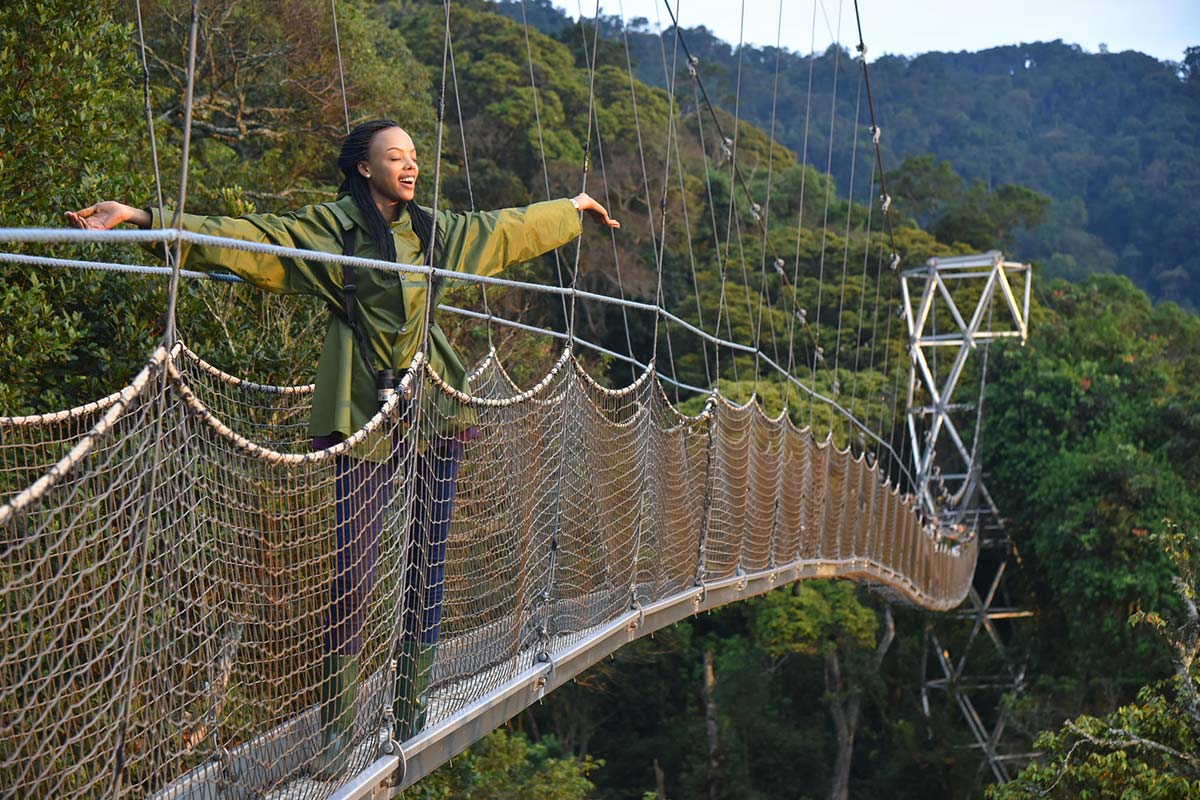
Soar above the ancient trees of Nyungwe on the exhilarating Canopy Walkway. This 160-meter-long suspension bridge offers a perspective of the rainforest usually reserved for the birds. From 70 meters in the air, you will gaze across an endless sea of green, spotting vibrant birds and agile primates leaping through the branches. It is a heart-pounding yet peaceful experience that showcases the sheer scale and beauty of one of Africa’s oldest montane forests.
Experience Highlights
The Full Experience
A detailed walkthrough of your activity day from start to finish.
Trail Hike
A 1-hour hike on the Igishigishigi trail to reach the walkway.
The Bridge
Cross the three-section suspension bridge at your own pace.
Canopy Views
Observe the forest layers and wildlife from a unique vantage point.
Return Hike
Follow the trail back to the Uwinka Visitor Centre.
Pricing & Permits
Everything you need to know about permit and activity costs.
Activity Permit
Official Permit & Entrance Fees
Guest Reviews
0 verified reviews from our guests
Write a Review
No reviews yet. Be the first to share your experience!
Frequently Asked Questions
How does chimpanzee trekking in Nyungwe compare to gorilla trekking?
Chimpanzee trekking is a significantly different experience from gorilla trekking. While gorillas are generally calm and sedentary, chimpanzees are highly active, vocal, and mobile. A trek to find them can involve fast-paced walking as they move through the high canopy, swinging from branch to branch. The encounter is often filled with the loud "pant-hoots" and screams of the troop, creating a high-energy atmosphere.
Because chimps spend more time in the trees, you will often be looking up, whereas gorillas are primarily seen on the ground. Both experiences are equally profound but cater to different spirits of adventure. Chimpanzee trekking requires a bit more agility and patience as you follow their dynamic movements through the dense undergrowth and hilly terrain of the ancient forest.
What is the Canopy Walkway like for those afraid of heights?
The Canopy Walkway is a marvel of engineering, suspended 70 meters above the forest floor and spanning 160 meters in length. It is incredibly stable, but for those with a severe fear of heights, it can be a significant challenge. However, the views it provides of the rainforest canopy—an perspective usually reserved for birds and monkeys—are absolutely unparalleled and often worth facing the fear.
The walk is divided into three sections, allowing you to take it one step at a time. Our guides are experts at providing reassurance and ensuring you feel secure throughout the crossing. If you decide it is not for you, Nyungwe offers dozens of other stunning ground-level trails that showcase the forest's beauty without the need for elevation.
Can I see the Rwenzori Colobus monkeys easily?
Yes, Nyungwe is one of the best places in the world to see the Rwenzori Colobus. These monkeys are famous for forming "super-groups" that can number in the hundreds—sometimes up to 400 individuals in a single troop. Their striking black and white coats make them easy to spot against the deep green of the forest.
The Colobus monkeys are generally more relaxed than the chimpanzees, allowing for excellent photography and extended observation as they feed and play in the trees. Trekking to find them is usually less strenuous than chimp trekking, making it a fantastic option for those who want a rewarding primate experience with a slightly lower level of physical exertion.
What kind of hiking trails are available for non-primate enthusiasts?
Nyungwe is a hiker's dream, featuring an extensive network of over 15 designated trails ranging from easy strolls to multi-day expeditions. The Igishigishigi Trail is popular for its connection to the Canopy Walk, while the Umuyove Trail takes you through some of the forest's tallest and most ancient trees.
For those seeking a challenge, the Congo-Nile Divide Trail offers a rugged journey along the ridge that separates the two great African river basins. There are also trails leading to breathtaking waterfalls, such as the Isumo Trail, which culminates at a thunderous 17-meter drop surrounded by tree ferns. Every trail is an opportunity to discover rare plants, vibrant butterflies, and the incredible silence of the deep woods.
Is Nyungwe Forest safe to visit?
Absolutely. Nyungwe is a highly protected National Park with a dedicated team of rangers and researchers who ensure the safety of both visitors and wildlife. The park is managed with strict regulations to preserve its ecological integrity, and all treks and hikes must be accompanied by a certified park guide who is trained in first aid and forest navigation.
We always stay updated on local conditions and work closely with the park authorities to ensure our guests have a seamless and secure experience. As with any wilderness area, following your guide's instructions and staying on designated paths is the key to a safe and enjoyable visit to this magnificent rainforest.
How long does it take to drive to Nyungwe from Kigali?
The drive from Kigali to the Nyungwe Forest headquarters (near Gisakura) typically takes between 5 to 6 hours. While it is a long journey, the drive is incredibly scenic, taking you through the "land of a thousand hills," past terraced tea plantations, and through vibrant local towns. It is a fantastic way to see the Rwandan countryside.
For those who prefer a quicker arrival, domestic flights are available from Kigali to Kamembe Airport, which is about an hour's drive from the park. We often recommend the drive for at least one direction of your trip to fully appreciate the geographical beauty and cultural richness of Rwanda outside the capital city.